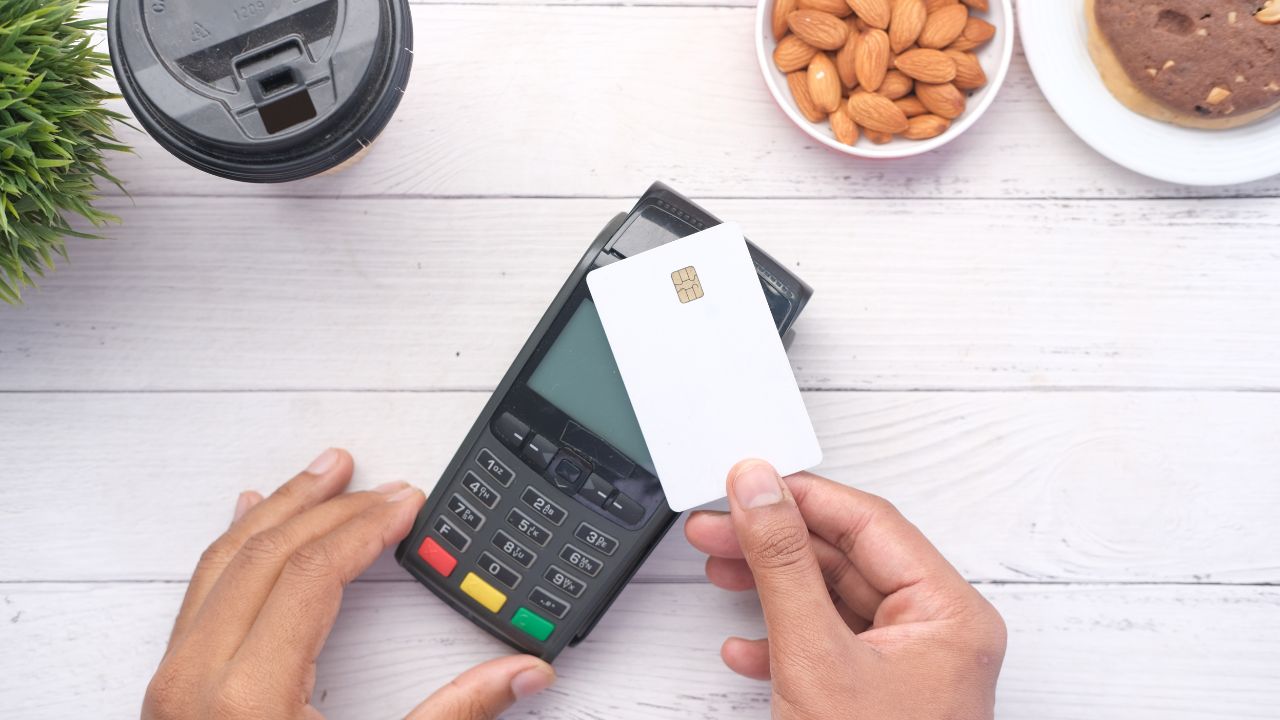
You booked the room with a virtual card, the confirmation came through, and then the front desk asked for “the card you booked with” plus a card for incidentals. There is nothing to hand over, because the card only exists in a dashboard. Virtual cards are good for travel bookings, but the booking and the stay are two different payment events, and only the first one happens online.
Quick answer
– A virtual card works well for anything charged in full online: Airbnb stays, prepaid hotel rates, flights and tours.
– It often fails at the front desk: card presentation, incidentals holds and car rental deposits usually need a physical card.
– An online-only card cannot be shown or inserted at check-in. Plan a second payment method for the stay.
– Always read the property’s payment policy and get its answer in writing before you rely on a virtual card.
Two payment events: the booking and the stay
Travel payments split into two moments.
The booking is a card-not-present transaction. You type the card number, expiry and CVV into a website or app, the merchant sends an authorization request, and the issuer approves or declines it. Card type and form factor matter less here. If the card passes AVS (address verification), 3D Secure and the merchant’s risk rules, it works.
The stay often involves a card-present step. Hotels take a deposit for incidentals, such as minibar, room service or damage, and car rental desks take a security hold. Many properties also want to see the card used for the booking, together with ID, as a fraud check. That is where an online-only card has nothing to offer: there is no chip to insert, no plastic to show and, for many virtual cards, no phone wallet to tap.
Some cards in your wallet handle both moments. A virtual card handles only the first, so plan for the second.
Airbnb and other “pay in full online” platforms
Airbnb charges the guest through its own checkout, so the host never sees your card. Its help center lists Visa, Mastercard, American Express and JCB credit cards, debit cards that can be processed as credit cards, Apple Pay, Google Pay and PayPal in most countries, plus local methods in some. It also says prepaid cards are not accepted for its Klarna pay-over-time option. It doesn’t state a general rule for prepaid cards outside Klarna, so a prepaid virtual card may or may not be accepted for a given booking. [VERIFY: Airbnb’s position on prepaid cards outside Klarna]
Two Airbnb details matter for a prepaid balance:
- Split payments. Where Airbnb offers “pay part now, part later”, the second payment is charged to the same card automatically before the stay. If the balance is short on that date, the payment fails and the reservation is at risk. [VERIFY: current Airbnb split-payment rules and retry window]
- Changes and extra charges. Date changes, extra guests or a host’s damage claim are charged through Airbnb, so keep the card active until the trip is fully closed.
There is usually no check-in problem with Airbnb, because no front desk asks to see a card. That is why it is the best match for a virtual card.
Hotels: prepaid rates vs pay at property
Hotel rates come in two kinds, and the difference decides whether a virtual card is enough.
- Prepaid (“pay now”) rates are charged at booking, either by the hotel or by the booking site. Your card’s job is done once the charge settles. You may still need a card for incidentals at check-in.
- Pay-at-property rates use your card only as a guarantee at booking. The hotel charges the room on arrival or departure, often at the desk. A virtual card number can guarantee the booking, but when the hotel tries to charge it, it may want the card present, and if it can’t verify the card it may ask for another one.
Then there is the incidentals hold. At check-in, many hotels authorize an amount per night or per stay on top of the room rate. It is a hold, not a charge, and it is released after checkout according to the issuer’s timing, which can take several business days. Hotels often prefer a credit card for this hold. Some accept debit cards or a cash deposit, and many decline prepaid cards. Each property sets its own amount and rules, so this varies even within one hotel chain.
Where a virtual card works, and where you still need plastic
| Travel payment | Typical charge model | Virtual card at booking | What you may need on site |
|---|---|---|---|
| Airbnb stay | Charged in full online (or in parts) | Often fine | Usually nothing |
| Hotel, prepaid rate | Charged at booking | Often fine | Card or cash for incidentals; possibly the booking card and ID |
| Hotel, pay at property | Guarantee only; charged at the desk | Can guarantee the booking | A physical card for the room charge and incidentals |
| Hostel or guesthouse | Deposit online, balance on arrival | Fine for the deposit | Cash or a local card for the balance |
| Flights | Charged at booking | Usually fine | Some airlines may ask to see the card used to pay [VERIFY: airline-specific] |
| Car rental | Hold at the desk, final charge at return | Prepaid vouchers may work | A physical credit card in the driver’s name, in most cases |
| Tours and activities | Charged online | Usually fine | Booking confirmation |
Car rental is the hardest case. Most rental desks want a physical credit card in the main driver’s name for the security deposit, and many refuse prepaid and debit cards for it. Even if you prepaid the rental online with a virtual card, the deposit is a separate hold at the desk. Read the rental terms before you book.
A booking procedure that avoids the check-in problem
This is the order I would follow before relying on a virtual card for a trip.
1. Choose the rate type on purpose. If you want to pay with a virtual card, book a prepaid rate so the room is fully paid before you arrive.
2. Read the property’s payment policy. Look for wording about “card presented at check-in”, “incidentals”, “security deposit” and “prepaid or debit cards”.
3. Ask the property directly. Send a short message: “I’m paying online with a virtual card that can’t be shown at the desk. Can I check in without presenting it, and what do you accept for incidentals?”
4. Keep the answer in writing. A reply from the property’s own email, or a message in the booking platform, saves an argument at the desk.
5. Pack a second method for the stay. A physical debit or credit card in your name, or cash if the property accepts a cash deposit.
6. Match names. Put the card’s billing name on the reservation as the guest name, or tell the property who paid. Hotels often ask for an authorization form when a third party pays.
7. Keep the balance for later charges. Split payments, date changes and post-stay charges all need the card to still be funded and active.
8. Save your receipts. A copy of the confirmation and the charge helps if a deposit or refund is disputed later.
One example of a crypto-funded travel card
For people who earn or hold stablecoins, a prepaid card is a practical way to pay the online part of a trip. VCCBuy’s Airbnb page describes one setup: a prepaid Visa or Mastercard funded with USDT, USDC or other supported coins, with the balance credited in USD after the deposit is checked. You can save a billing name and address per card for AVS, request 3D Secure codes in the dashboard (each one is shown for 10 minutes, and no phone number is needed) and freeze the card after the trip. To be clear about the limits: VCCBuy cards are online only. They can’t be presented or inserted at a front desk or rental counter, and like any prepaid card they will be declined by some properties and for most security deposits. Bank-issued virtual cards have the same check-in limit unless your bank lets you add them to a phone wallet that the hotel accepts.
FAQ
Can I show the virtual card on my phone screen at check-in? You can show it, but many hotels won’t accept a screenshot or dashboard view as proof, because it can’t be inserted or verified at their terminal. Some may key the number in manually. That is their decision, so ask before you travel.
Why was an extra amount held on my card at the hotel? That is the incidentals hold. It is an authorization, not a charge, and it is released after checkout according to your issuer’s timing. On a prepaid card, it reduces your available balance until then.
Can I use a prepaid virtual card for a car rental deposit? Usually not. Most rental desks require a physical credit card in the driver’s name for the deposit, even if the rental itself was prepaid online.
Conclusion
A virtual card is a solid way to pay for the parts of a trip that happen online: the Airbnb, the prepaid room, the flight and the tour. It is not a substitute for a physical card at the front desk or the rental counter, so book prepaid rates, ask the property in writing and pack a second payment method. If you want a crypto-funded card for the online part, VCCBuy is one option to compare with your bank’s virtual cards.
About the author: [Author name] is a payments and fintech writer at VCCBuy (https://vccbuy.net/), where they cover virtual cards, card networks and spending stablecoins online. They write about how travel merchants authorize, hold and charge cards, and where virtual cards stop working.
Disclosure: the author writes for VCCBuy, which is mentioned in this article.
Leave a Reply